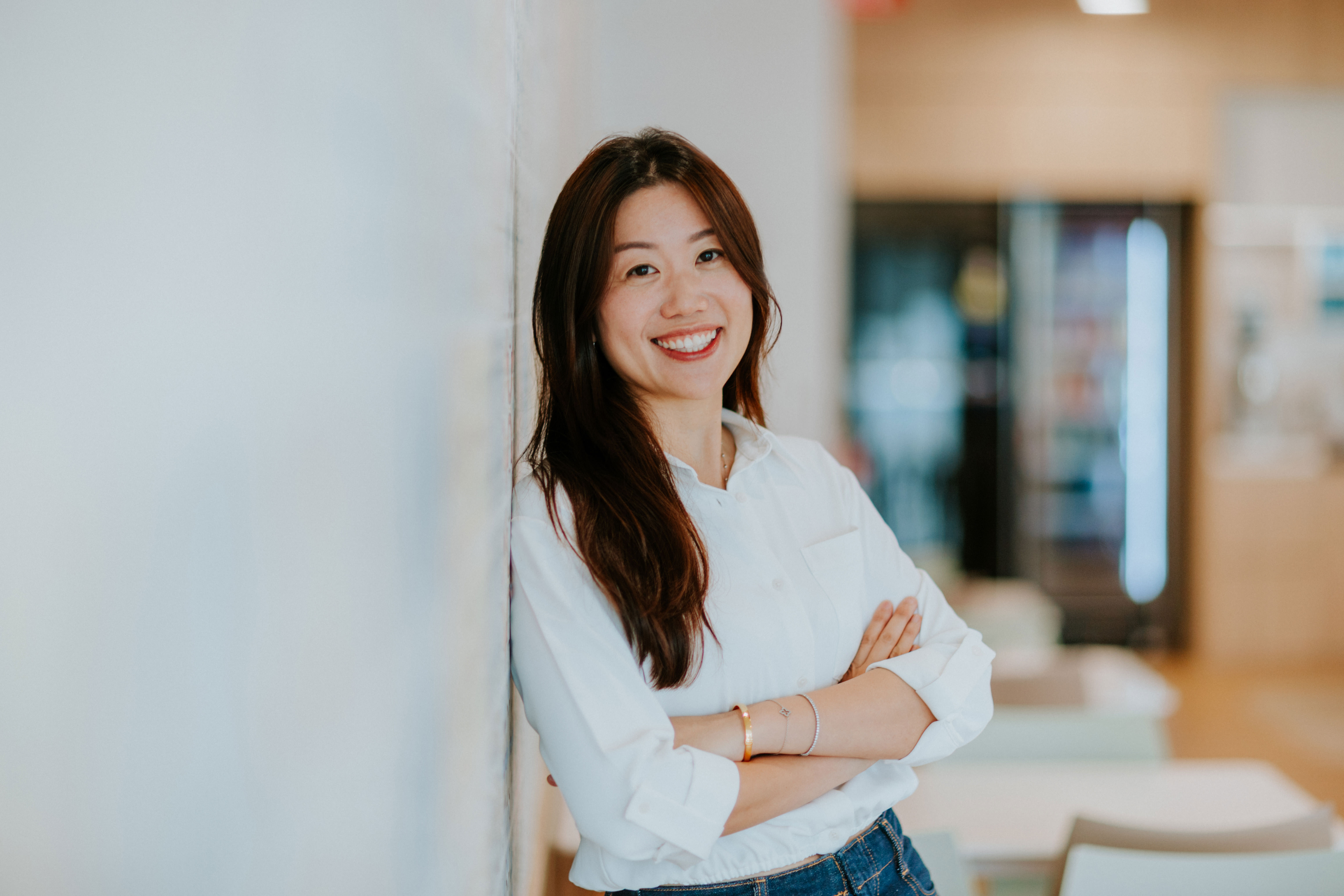
I want to be upfront about something: I have skin in this game in a way that most enrichment providers don't.
My child is sitting PSLE this year. Which means I've lived the last twelve months inside the specific anxiety that Singapore parents know well — the tuition scheduling, the past-year papers, the careful calibration of when to push and when to back off. I know what it feels like to weigh every weekend activity against exam prep. I'm not writing this from the outside.
I'm also the co-founder of an AI education programme for kids. So you might expect me to tell you that academic results don't matter and that building things is more important than exams.
I'm not going to say that. It would be dishonest, and you'd see through it.
What I am going to say is more uncomfortable: the Singapore school system is producing something very specific, and it's doing it extraordinarily well — and there is a capability it is almost entirely not building. And the gap between those two things is going to matter enormously for the generation currently sitting in our classrooms.
What the System Does Well
Let me be clear about what I think works, because I'm a product of it.
I'm a GEP alumna. I went to Raffles Girls' School. I became a CPA and spent nearly two decades in finance at companies like Grab and Airwallex. The analytical rigour I developed through Singapore's education system has been foundational to everything I've built professionally.
The system is genuinely good at producing people who can break down a complex problem, identify what the question is actually asking, and produce a correct, well-structured answer under time pressure. These are not trivial skills. They translate directly to high-stakes professional environments.
My child, who is currently navigating PSLE, is developing those skills. I see it. I'm proud of it.
What the System Doesn't Build
What I don't see — what I didn't develop until much later in my career, and had to develop almost entirely outside the classroom — is the ability to start from nothing.
Every exam question in the Singapore system gives you the problem. It's defined, bounded, and designed to have a correct answer. The skill being tested is: given this problem, can you find the solution?
The skill that isn't tested — because it can't really be standardised or graded — is: given nothing, can you find the problem worth solving, and then build something to address it?
This isn't a criticism of MOE. Curriculum design involves trade-offs, and standardised assessment has genuine value. It's an observation about a gap — one that parents who are paying attention are already sensing, even if they haven't articulated it in these exact terms.
The Conversation I Keep Having
Since starting Dreambuilders.sg, I've had dozens of conversations with Singapore parents that follow the same pattern.
They tell me their child is doing well in school. Strong results, maybe gifted, definitely hardworking. But when they watch their child with a creative brief — an unstructured problem with no defined answer — something changes. The child who aces problem sets freezes when asked "what do you want to build?"
Not because they're not smart. Because they've never been asked that question before. Every question they've been trained on has an answer. This one doesn't. It has infinite possible answers. And that's terrifying if you've spent your whole educational life being rewarded for finding the right one.
I recognise this because I felt it myself, much later in my career, when I moved from structured finance roles into building something from scratch. The skills that got me through every exam were necessary but not sufficient. I had to learn a different mode of operating — one where "I don't know yet" is the starting point, not a failure.
What I Want for My PSLE Child
Here's the honest thing: I want my child to do well in PSLE. I'm not going to pretend otherwise.
And I want something else too. I want them to come out of childhood knowing what it feels like to look at a blank screen and turn it into something real. To have the experience — at least once, ideally many times — of making something that didn't exist before, that works, that other people can use.
Those two things are not in conflict. But the second one doesn't happen inside the school system. It has to happen somewhere else.
That's part of why I built Dreambuilders.sg. Not despite being a PSLE parent, but because of it. I know exactly what the system gives my child, and I know exactly what it doesn't. I wanted to build the thing that fills that gap.